If you are looking to level up your outdoor space in Chelmsford, you probably want something that looks good for years, not just months. Corten steel planters have that unmistakable weathered look, and they suit everything from modern patios to traditional Essex gardens. But choosing the right planter is more than picking a colour. It is about placement, drainage, base detail, and how the material behaves in real UK weather. This guide will help you make the right call for residential, commercial, and roof terrace use.
Quick takeaway
Corten steel planters look fantastic when they are designed and installed with the right base, feet, and drainage approach. Get those right, and the planter will perform far better long-term.
What corten steel planters are
Corten steel planters are made from a type of steel that naturally develops a stable rust-like surface over time. That weathered finish is often the main reason people fall for them. It gives a warm, earthy character that blends beautifully with planting and hard landscaping.
Importantly, “corten” is not the same as untreated mild steel. The surface layer forms as the planter is exposed to the elements, helping create that protective, textured patina. The look is part of the charm, and it is also why these outdoor metal planters have become so popular in the UK.
Why corten steel planters work well in Chelmsford and Essex
Essex weather can be a bit of everything. You get proper seasons, plenty of damp spells, and the sort of freeze-thaw cycles that can punish cheaper outdoor materials. Corten’s weathering behaviour, along with proper planter design, is why many people in Chelmsford choose it for gardens and terraces.
That signature patina (without the “quick rust” look)
The surface matures gradually. In the early stages, you may see more active weathering. Over time, the appearance becomes more consistent, with that classic copper-brown tone that pairs nicely with grasses, shrubs, and evergreen planting.
They suit both modern and classic outdoor spaces
Chelmsford homes can be anything from sleek townhouses to leafy family gardens with mature beds. Corten steel planters sit in that sweet spot: contemporary enough for architectural landscaping, but natural-looking enough not to feel out of place.
Design uses for gardens, terraces, balconies, commercial spaces, public areas, and hospitality
One of the best things about outdoor metal planters is how flexible they are for layout. Whether you are creating a planting feature, adding screening, or defining circulation, corten steel helps you do it with style.
Residential gardens and boundaries
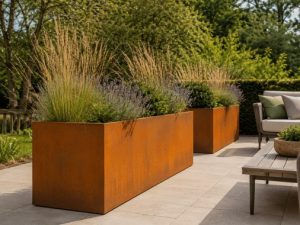
In a garden, corten steel planters work brilliantly for focal points, edging, and planting zones. They also make a strong statement beside modern paving, gravel areas, or even pathways where you want a tidy, architectural look.
Terraces and roof terraces
For terrace planters and roof terrace planters UK projects, the big priority is base detail and weight. If you are using raised outdoor spaces, you will usually want a system that supports the planter, helps manage drainage, and makes maintenance manageable. If you are planning a roof terrace, it is well worth reading the Metal Planters Ltd guide on roof terrace planters in the UK.
Balconies and compact outdoor areas
Balcony spaces can look cramped quickly. Planters that are correctly sized for the area, and placed where they do not block access, can transform a small balcony into a proper outdoor room. Think about the viewing height, wind exposure, and how you will water without making a mess.
Commercial planters for offices, hospitality, and public space
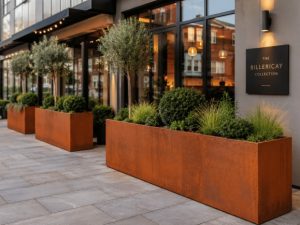
Commercial planters need to handle real-world use, from busy entrances to outdoor seating spillover. Corten steel planters are often chosen for their visual impact and “grown-in” look, which suits cafés, hotels, and reception areas. They also work well as landscape planters for visual screening, creating calmer zones without building new walls.
Installation and placement steps (the bit people skip)
You can have the nicest planter in the world, but if it sits on the wrong base or has poor drainage, you will be dealing with problems quickly. This is where a bit of planning saves money and hassle.
Step 1: Pick the right location and access
- Check how you will move soil and plants into place.
- Plan for watering access, especially on terraces and roof spaces.
- Consider sightlines for visitors and neighbours. In public-facing spaces, placement is everything.
Step 2: Think about drainage before you order
In most garden and terrace installs, drainage is what protects both the planter and the planting. If a planter does not manage water properly, you can end up with waterlogged compost and ongoing maintenance issues.
For terrace and roof terrace use, it is also common to use planter feet or a substructure so water can move where it needs to, rather than trapping moisture beneath. If you are comparing options, the terrace planters guide from Metal Planters Ltd is a handy reference.
Step 3: Use the right base and feet approach
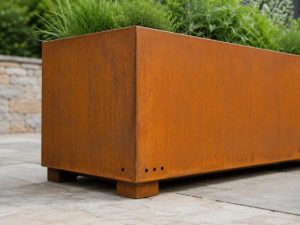
Base detail is one of those “small” things that makes a big difference. Planter feet can help create an air gap and reduce direct contact with damp surfaces. In many projects, a substructure or mounting system is used so the planter remains stable and properly aligned.
Metal Planters Ltd also supplies planter substructure systems, which can be particularly useful for elevated installations.
Step 4: Assemble, level, and secure (where needed)
Leveling is not just for looks. A tilted planter can influence drainage and soil distribution. In commercial or public areas, stability matters even more because planters are handled and cleaned more frequently.
Step 5: Backfill and plant carefully
- Use a suitable compost and add drainage-friendly materials where needed.
- Plant to match the size of the planter, not just the space available.
- Allow for growth so you are not constantly re-potting or thinning within the first season
Industrial and commercial applications
Corten steel planters are not only for houses. In the commercial world, you often need a blend of durability, design, and repeatable results across multiple locations. In Chelmsford, that might mean corporate grounds, retail frontage, hotel terraces, or campus-style landscaping.
Outdoor screening and zoning
Planters can define spaces without permanent walls. They work for privacy screening, wind buffering, and creating calmer seating areas.
Hospitality entrances and outdoor dining
For hospitality areas, the planter needs to look good quickly and handle ongoing maintenance. With the right planting selection and a sensible maintenance schedule, corten planters can look like part of the architecture, not an afterthought.
Large-format landscape planters
Bigger planters can be used as statement pieces and to anchor landscaping schemes. If you are working on a layout with multiple planters, it is worth thinking about consistent sizes, planting heights, and how the spacing reads from the street.
Benefits of corten steel planters
People choose corten steel for a reason. It looks distinctive, it works well outdoors, and it gives you a more “finished” feel than basic metal pots. Here are the benefits that tend to matter most to Chelmsford customers.
1) Weathered appearance that looks better with time
Corten planters develop their patina gradually, creating a living, textured finish. In many gardens, that mature look is exactly what people want, rather than constant “fresh paint” upkeep.
2) Strong visual structure for landscaping
Metal planters bring a crisp line to planting schemes. Even when plants are not at peak growth, the planter shape and finish still hold the design together.
3) Works in residential, terrace, and commercial settings
From back gardens to roof terrace planters UK designs, corten steel fits a wide range of outdoor living spaces. If the base and drainage are planned properly, the material is well suited to the realities of UK weather.
4) Bespoke metal planters available
Every site has its own challenges, especially around access, levels, and how the planting needs to behave. Bespoke metal planters can help you match the planter to your space rather than forcing your space to fit the planter. If you want to explore options, have a look at the metal planter range and the wider planter systems approach from Metal Planters Ltd.
Material and product specification guidance
If you are comparing corten steel planters, the detail that matters most is the specification. Thickness, finish approach, and how the planter is constructed can influence both appearance over time and long-term performance outdoors.
Common planter construction options
In the Metal Planters Ltd range, you will find corten steel options such as 3mm corten steel planters. Depending on your project, there may be different thickness or construction approaches suitable for varying sizes and use cases.
Why thickness can matter
Thicker metal can generally help with rigidity and consistent shape, especially for larger formats. That said, the right planter is about the full system, including base support and drainage planning, not just the plate thickness.
Drainage, base, feet, and practical installation considerations
If you want your outdoor metal planters to look great for longer, plan the bottom detail. This section is the “get it right first time” checklist.
Drainage basics for outdoor planters
- Water should be able to drain out of the planter into the base system or substrate as intended.
- Avoid water pooling under or around the planter where possible.
- Use planting mixes appropriate for the type of plants and exposure level.
Planter feet and base systems
Feet and base systems help lift the planter slightly, improving airflow and reducing the likelihood of direct trapped moisture against surfaces. For some projects, a dedicated system is also used to support the planter correctly on hard outdoor areas.
If your install involves a terrace or an elevated setup, it is worth exploring component solutions such as planter feet. For example, Metal Planters Ltd supplies planter feet sets for relevant installs.
Maintenance after installation
Like any planter, corten steel needs basic care. You are not looking at constant repainting, but you should keep an eye on drainage, remove debris, and monitor how the patina settles.
One practical tip for Chelmsford patios
If you are placing a weathering material near light-coloured paving, keep an eye on the early-stage patina runoff. Getting the base detail right helps avoid staining where it matters.
Common mistakes to avoid
Most planter problems are avoidable. Here are the mistakes that come up again and again when people in Essex are planning landscaping.
- Skipping drainage planning: waterlogged compost leads to poor plant health and constant upkeep.
- Ignoring access: if you cannot reach the planter comfortably, you will avoid maintenance and watering.
- Placing planters on uneven surfaces: poor leveling affects stability and drainage.
- Choosing a style without considering scale: large planters need the right spacing and planting height to look balanced.
- Assuming all “rust” is the same: corten develops a patina as it weathers. The surface evolution is part of the design.
Planning and buying advice (so you feel confident)
If you are not sure where to start, begin with how the outdoor space is actually used. Ask yourself what the planter needs to do: feature, screen, anchor planting, or define a terrace seating zone.
Residential purchase checklist
- Measure the space and think about the planter’s final viewing angle.
- Consider planting type and how quickly you want the area to look established.
- Plan base and drainage for your paving or planting substrate.
- Work out whether you need a modular system or a one-off planter.
Commercial purchase checklist
- Clarify the number of planters and whether you need repeatable sizes for consistent visual design.
- Plan for easy maintenance access and cleaning routines.
- Consider how planters interact with footfall, entrances, and seating areas.
Where to find guidance before you commit
If you want to compare options and understand what suits your use case, Metal Planters Ltd has practical guides. For an overview of material and styles, you can read the metal planter guide and the more location-specific metal planter guide for Essex. If your focus is terrace planning, the dedicated terrace planters guide UK is a solid starting point.
FAQs
Are corten steel planters suitable for wet UK weather?
Yes, they are designed for outdoor conditions and develop their weathered patina as they are exposed to the elements. The key is getting the drainage and base detail right so water does not pool where it should not.
Will corten steel planters stain paving?
They can mark some surfaces, especially during the early weathering stage. Planning the base and considering placement near light paving helps reduce issues. If you are unsure, it is best to discuss the surface type and placement with a specialist before ordering.
How do I choose the right size of corten steel planter?
Start with the space you have and the height you want for planting. Bigger planters can work as statement pieces or screening, while smaller formats are great for defining borders or creating repeating features on a terrace.
Do I need planter feet or a substructure for a roof terrace?
Often, yes. Roof terrace planter setups typically need proper support and a drainage approach that works with the terrace surface. For roof terrace planning, you will find useful guidance in the roof terrace planters UK guide.
Can corten steel planters be used for commercial landscaping?
Definitely. Corten steel planters are commonly used for offices, hospitality, and public-facing outdoor spaces because they look architectural and can create structured planting zones.
Do corten planters need painting or rust treatment?
Usually not. The look comes from the material’s weathering process. You should still keep an eye on drainage and basic upkeep, especially after the first few wet months.
Can I order bespoke metal planters for a specific Chelmsford garden layout?
Yes. If your site has particular access, level changes, or planting goals, bespoke metal planters can help you match the planter design to the space rather than forcing a standard size.
What should I look for in a planter guide before buying?
Focus on drainage, base options, and placement considerations. Guides that explain terrace and roof terrace setup are especially useful if your project is raised or on hard paving.
Conclusion
Choosing Corten Steel Planters in Chelmsford, Essex is one of those decisions that can genuinely transform your outdoor space. They bring a distinctive weathered aesthetic, they suit both residential and commercial landscaping, and they work beautifully with planting when the design is thought through. If you want your planters to perform well long term, pay attention to drainage, base detail, and placement from day one. When you get those elements right, your planter scheme will look intentional, not improvised.
Ready to plan your corten steel planter project?
Visit https://metal-planters.co.uk/ for corten steel planters, bespoke metal planter options, terrace planter systems, and outdoor space planning support. If you would like tailored guidance for your layout in Chelmsford or across Essex, you can also request a quote.
Metal Planters Ltd can help with project-specific advice on planter choice, base and drainage considerations, and architectural garden product planning.